
What is Guanidinoacetic Acid?
January 28, 2026
Guanidinoacetic Acid (GAA), also known as glycocyamine or N-amidinoglycine, is a naturally occurring substance synthesized in the kidneys of vertebrates. It is the direct biochemical precursor to creatine, a compound essential for cellular energy metabolism, particularly in muscle and brain tissue.
Chemical Formula: C₃H₇N₃O₂
CAS Number: 352-97-6
Biological Role and Function:
GAA's primary importance lies in its role in the creatine biosynthesis pathway:
Synthesis: In the body, GAA is formed in the kidneys from the amino acids glycine and arginine.
Conversion: GAA is then transported to the liver (and other tissues), where it is methylated by the enzyme GAMT (guanidinoacetate N-methyltransferase).
End Product: This final step produces creatine, which is then distributed to muscles, the brain, and other high-energy-demand tissues.
Creatine is crucial for rapidly recycling adenosine diphosphate (ADP) back to adenosine triphosphate (ATP), the primary energy currency of the cell. This process is vital for short, high-intensity activities like muscle contraction and neural function.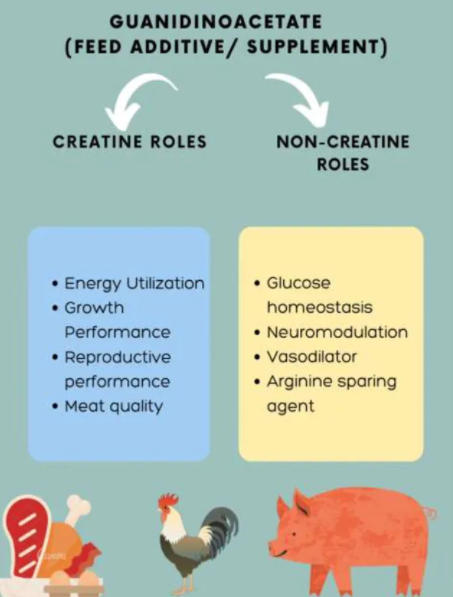
Primary Applications in Industry
1. Animal Nutrition & Feed Additive (Largest Market)
GAA is widely used as a feed additive to improve growth performance and feed efficiency in livestock and aquaculture.
Mechanism: Dietary GAA supplementation bypasses the body's own, often rate-limiting, GAA synthesis step. This leads to increased endogenous creatine production.
Benefits:
Poultry (Broilers & Layers): Improves average daily gain, feed conversion ratio, and breast meat yield.
Swine: Enhances growth performance, carcass quality, and meat quality.
Aquaculture: Promotes growth and improves feed utilization in fish and shrimp.
Ruminants: Can partially spare methionine, an expensive essential amino acid.
2. Human Dietary Supplements & Sports Nutrition
In the supplement industry, GAA is marketed as a creatine booster.
Mechanism: Similar to animal nutrition, it aims to elevate the body's creatine phosphate stores.
Claimed Benefits: Increased muscular strength, power output, and lean body mass. It is sometimes positioned as an alternative to direct creatine monohydrate supplementation.
3. Pharmaceutical & Biochemical Applications
Used as an intermediate in the synthesis of certain pharmaceuticals.
Serves as a research reagent in biochemical studies related to energy metabolism and creatine-related disorders.