Toltrazuril oral solution vs Diclazuril oral solution
June 26, 2026
Pharmacological Differences
Both Toltrazuril and Diclazuril are triazine-class anticoccidial agents, but they differ in their specific molecular targets and pharmacokinetic profiles.
Mechanism of Action:
Toltrazuril: Interferes with the division of the coccidian cell nucleus and disrupts mitochondrial respiratory and metabolic functions. It causes swelling of the endoplasmic reticulum and vacuolization, leading to parasite death. It acts on both schizogony and gamogony stages of the Eimeria life cycle.
Diclazuril: Acts on multiple intracellular stages of the parasite, including sporozoites, schizonts, and merozoites. Recent studies suggest it interferes with actin filament dynamics regulated by actin depolymerizing factor (ADF), disrupting parasite motility and cytokinesis. It also affects the parasite's respiratory chain enzymes and folate synthesis pathways.
Pharmacokinetics and Spectrum:
Absorption: Toltrazuril has higher oral bioavailability in poultry (over 50% absorption), allowing it to maintain therapeutic concentrations systemically. Diclazuril has limited oral absorption in poultry (bioavailability around 24%), meaning it acts more locally within the gastrointestinal tract.
Spectrum: Toltrazuril is effective against all major Eimeria species and is known to work against strains that are resistant to other anticoccidial drugs. Diclazuril also covers a broad spectrum but may require specific timing to avoid rapid clearance from the system.
Efficacy and Dosage Comparison:
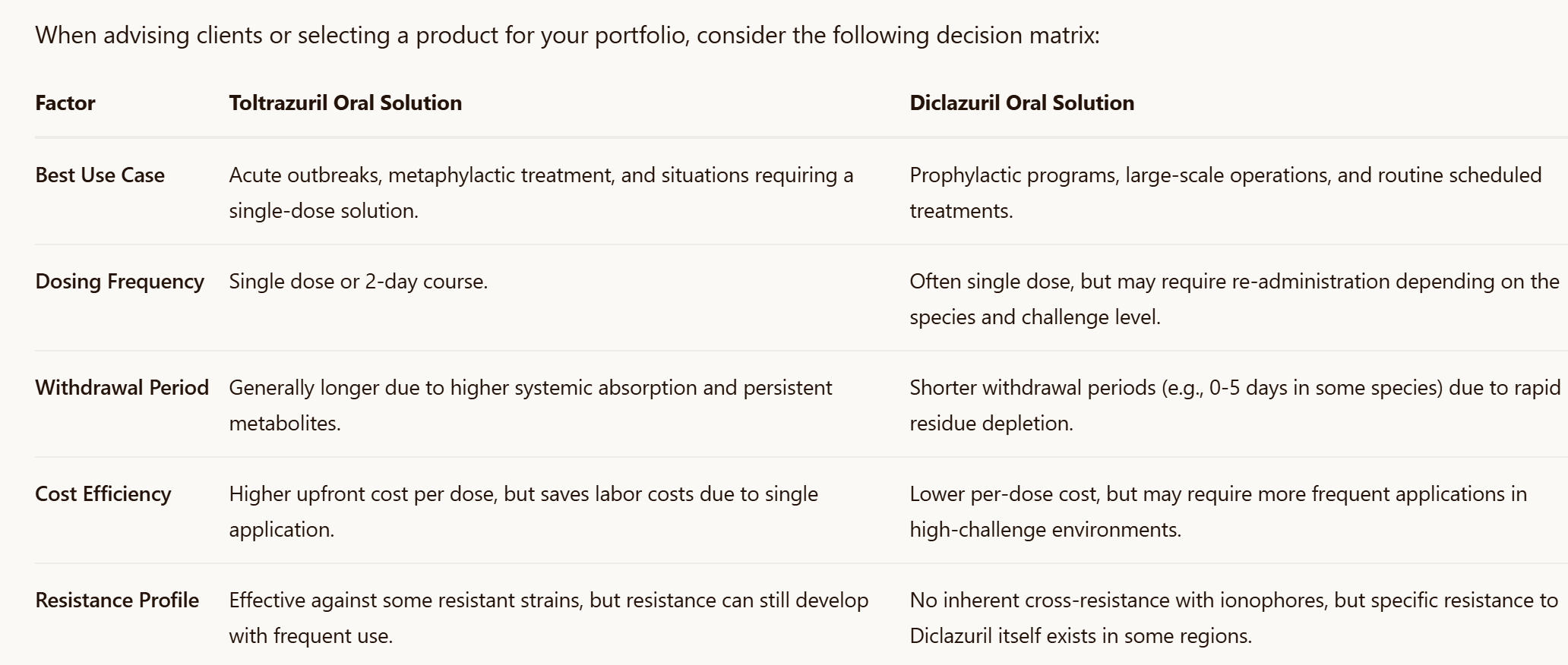
The choice between the two often depends on the specific livestock, the severity of the outbreak, and the desired duration of protection.
Dosage and Administration:
Toltrazuril: Typically administered as a single oral dose or short course. For poultry, the common regimen is 25 mg per liter of drinking water for 2 consecutive days. Its long half-life allows for sustained protection.
Diclazuril: Often requires precise timing relative to the parasite's life cycle. For example, in lambs, it is recommended to treat 10-14 days after moving to contaminated land. It may also require a second dose three weeks after the first to maintain efficacy.
Clinical Outcomes
Oocyst Shedding: Field studies in lambs have shown that Toltrazuril results in significantly reduced oocyst excretion days and intensities compared to Diclazuril. In calves, Toltrazuril has demonstrated a complete reduction in oocyst counts (zero OPG) 30 days post-treatment, whereas Diclazuril leaves a residual infection rate.
Weight Gain: In subclinical natural infections, animals treated with Toltrazuril often show higher daily weight gains compared to those treated with Diclazuril, likely due to the more thorough elimination of parasitic burden.
Strategic Recommendation:
For poultry and swine operations facing active clinical coccidiosis, Toltrazuril is generally the superior choice due to its curative properties and long-lasting protection from a single dose. For dairy calves and lambs in a preventative herd-health program where timing can be strictly controlled, Diclazuril offers a cost-effective solution with easier integration into automated watering systems.